Why Cheap Hearing Aids Make the Whole Restaurant Too Loud
A retired tool-and-die maker took his $40 pair apart on his workbench. What he found inside explains why your cheap device turns up the noise, but not the voices you actually want to hear.
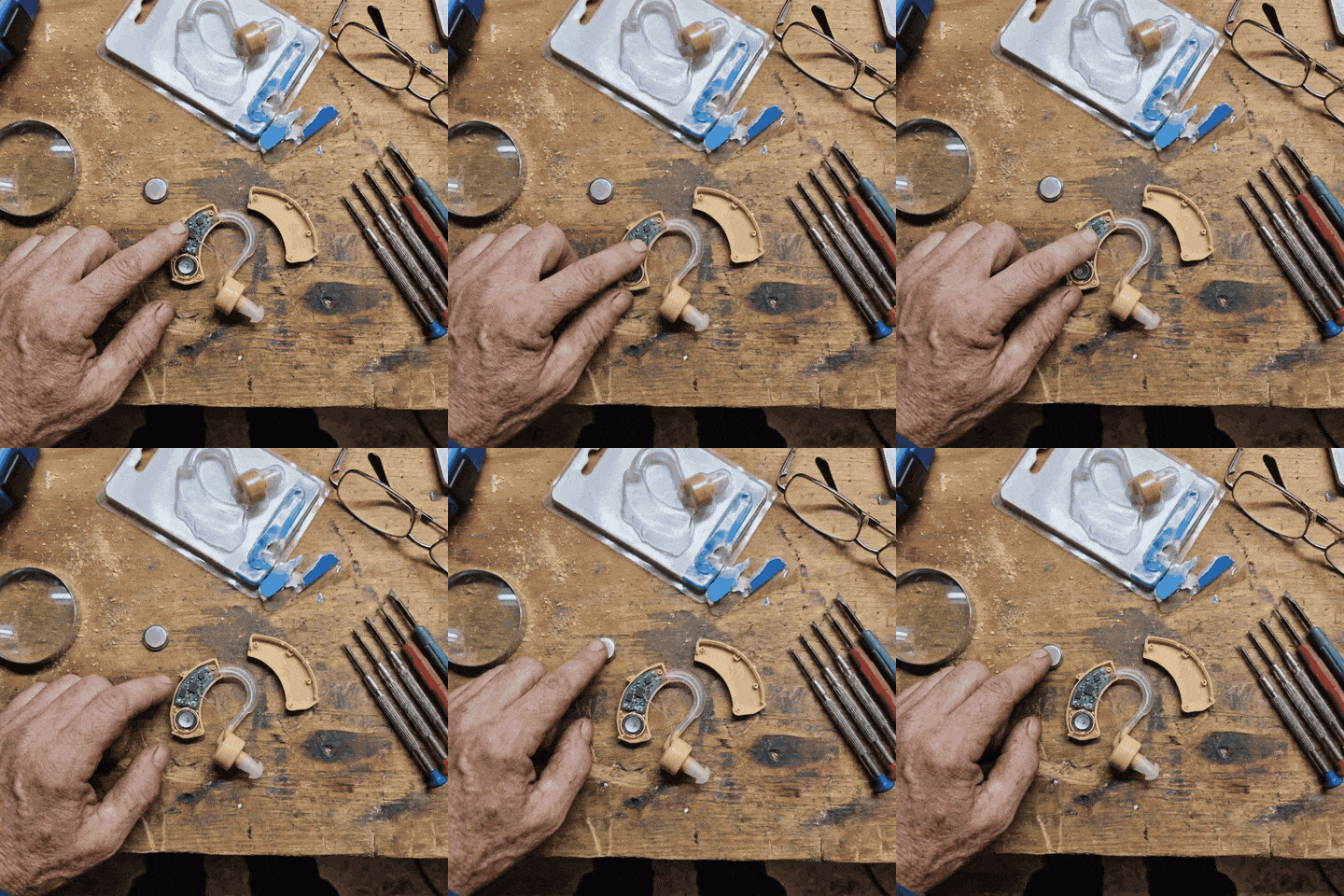
Everything Got Louder. Except My Wife.
It was a Friday night, and Carol and I were in our usual booth at the diner.
I'd put my new hearing aids in that afternoon. Forty dollars, online. I was feeling pretty pleased with myself.
Then somebody dropped a stack of plates in the kitchen.
It sounded like a car wreck.
The coffee machine hissed like a steam pipe. A booth of teenagers behind us laughed, and it went straight through my skull. A song came on over the speakers and I could hear every single drum.
Then Carol leaned across the table to tell me something.
And her voice was the one thing that didn't come through.

I saw her lips move. I caught "your sister" and maybe "Sunday." The rest was mush, buried under the plates and the music and the kids.
So I did what I'd been doing for three years. I nodded. I smiled. I said, "Sounds good."
Carol put her fork down. She'd asked me a question.
I had paid forty dollars to make everything louder except the one person I actually wanted to hear.
It took me a Saturday on my workbench to figure out why. If you've ever had a cheap pair do the same thing to you, you'll want to know too. Because it's probably not what you think.
Let me start at the beginning.
I Spent 3 Years Pretending I Could Hear My Own Family
My name's Ray. I'm 68. I spent forty-one years as a tool-and-die maker, building the tools that make the parts that go into everything from car doors to coffee makers.
I'm married to Carol. We have a granddaughter named Lily who could talk the ears off a donkey, and I mean that as the highest compliment.
My hearing didn't go all at once. It went the way a tire goes soft. A little bit at a time, so slowly you don't notice. Then one day you realize you've been driving on the rim.
The TV went up a notch every few months. Carol would come in from the kitchen and turn it down without a word. Ten minutes later I'd turn it back up.
Restaurants got harder. Then church got harder. Then the phone. My son would call and I'd spend half the conversation saying "Yep" and "Is that right?" and hoping he hadn't asked me anything important.
Everybody seemed to mumble. Especially the grandkids. Especially on the phone. Especially the actors on TV, who I was convinced had all started whispering on purpose.
So I did what most of us do. I found ways around it.
- I put the subtitles on and told Carol it was so I could "follow the accents."
- I sat at the end of the table so I could turn my good side toward people.
- I watched lips without realizing I was doing it.
- I laughed when everyone else laughed. Usually a beat late.
- And I nodded. Boy, did I nod.
I told myself I was managing.
Here's the thing nobody tells you about "managing." The bill doesn't come all at once. It comes in little pieces.
It comes as the joke at Thanksgiving that everybody's still laughing about, and you have no idea what it was. It comes as the TV argument you have every single night. It comes as the dinners you sit through but don't really attend.
And for me, it came as a little girl who stopped bringing me her news.
Lily used to run in from school and come straight to me, bursting with whatever happened at recess. Then one day she ran right past me to find her grandma. It kept happening. I didn't think much about it until Carol said it plainly one night.
"She thinks you don't want to hear it."
That one hurt. Because I did want to hear it. More than anything. I just couldn't.
I paid that bill for about three years before I did anything about it.
$3,190, a "No" From Medicare, and the One Thing the Clinic Never Mentioned
Carol is the one who finally got me to a hearing clinic. I think she was tired of repeating herself, and I don't blame her.
Nice people. Clean office. They put me in a little booth with headphones and played beeps, and I raised my hand when I heard one. I raised my hand a lot less than I thought I would.
Then came the quote.
$3,190 for a pair. Plus fitting appointments. Plus follow-up visits.
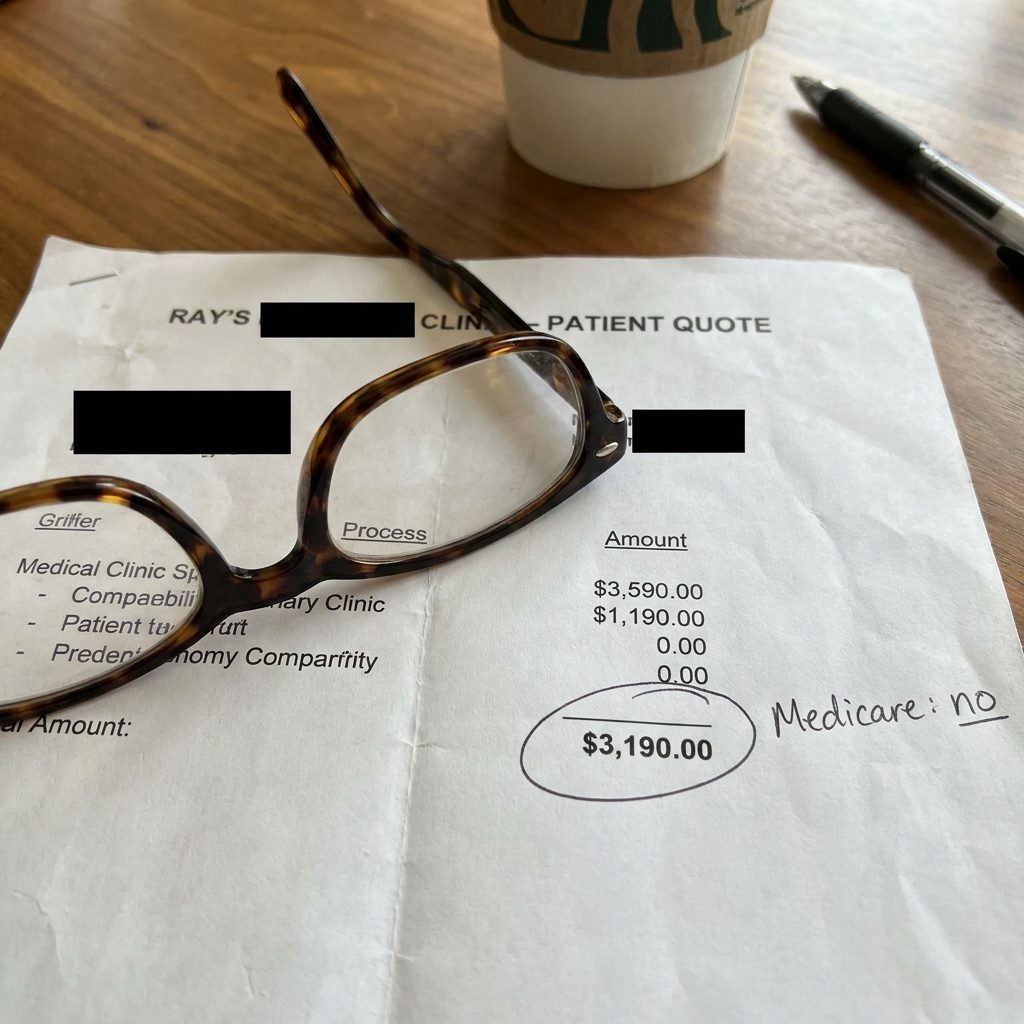
I asked about Medicare. The answer was the one I'd been afraid of. Medicare generally doesn't cover hearing aids. That was the end of that conversation.
Now, I'm not knocking clinics. If your hearing is worse than mine, or money's no object, they'll take good care of you. They have the training and the equipment, and some people really do need that.
But on a retirement budget, $3,190 is a lot of money for something you're not even sure you'll wear. So I said I'd think about it, and I walked out.
Here's what nobody in that office mentioned.
Since October 2022, adults with perceived mild to moderate hearing loss can buy an FDA-regulated hearing aid over the counter. No exam. No prescription. No fitting appointment.
It's the law. It took Congress until 2017 to pass it and five more years to put it into effect. And I didn't hear one word about it in that clinic.
I found out about it much later than I should have. And I found out the expensive way.
So I Bought the $40 Pair. It Made Everything Worse.
I did what a lot of guys do when they get a quote like that. I went online and found something cheaper.
There were dozens of them. Little beige things with a volume wheel, all calling themselves "hearing aids," all for less than a tank of gas. I picked one for $40 with a lot of stars next to it.
It showed up in about a week. I put it in my ear. And you already know what happened at the diner.
It wasn't just the diner, either.
At home, the fridge sounded like a jet engine. The dishwasher rattled like it was full of gravel. Every car that went by outside sounded like it was coming through the living room.
But Carol's voice? Still mush. Louder mush, maybe. Still mush.
The worst of it was Lily. She came over that weekend with a story about a classmate's hamster that escaped. She was so excited she could barely get it out.
The TV in the next room got louder. The car going by outside got louder.
Lily didn't.
I watched her face fall when I said "What, sweetheart?" for the third time. She gave up and went to find her grandma.
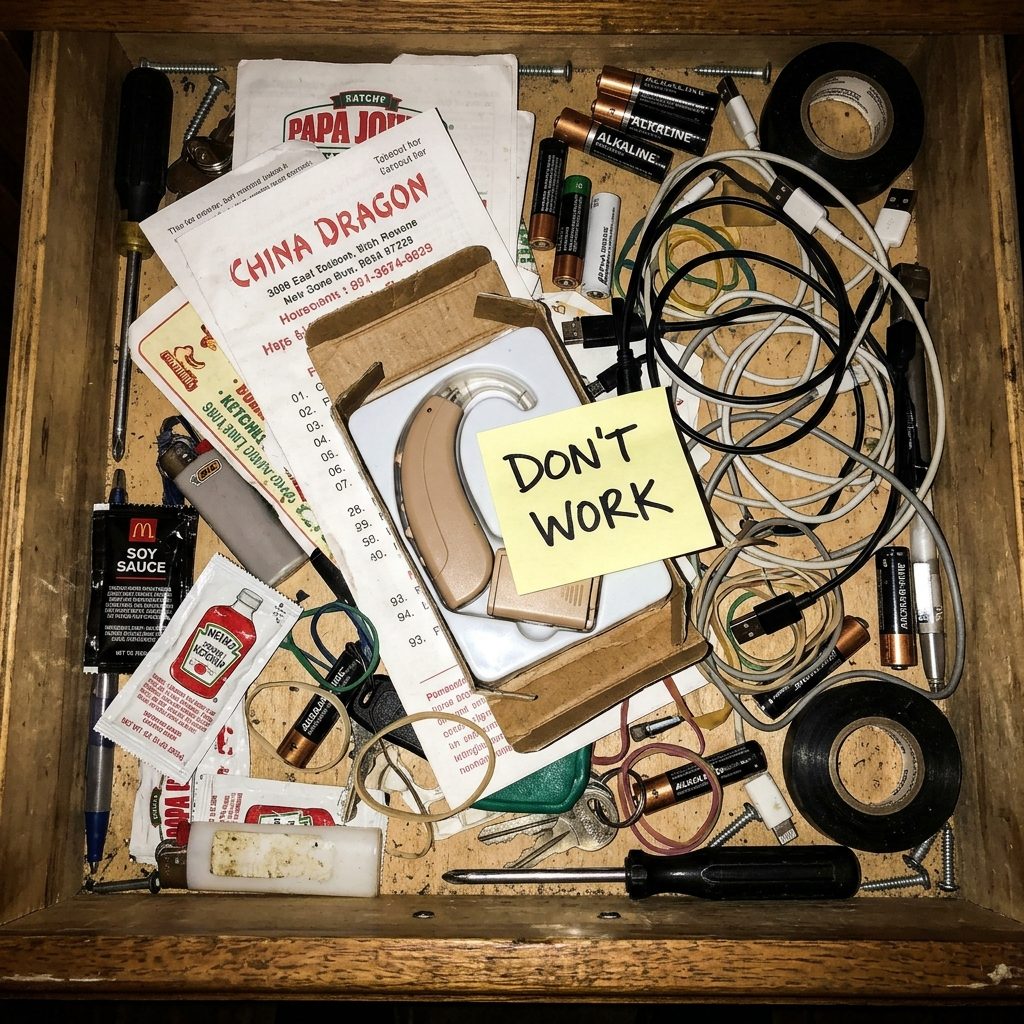
The $40 pair went in the kitchen drawer, next to the dead batteries and the takeout menus. And I decided right then that cheap hearing aids don't work.
Turns out I was half right.
I Opened It Up on My Workbench. There's Almost Nothing Inside.
Forty-one years of taking things apart doesn't leave you just because you retire.
That $40 pair sat in the drawer for a couple of months. But it bugged me. I'm the kind of guy who has to know why a thing doesn't work. So one Saturday morning I took it out to the garage, cleared a spot on the bench, and got out my smallest screwdriver.
It took me about four minutes to get it open. Here's everything I found inside:
- A tiny microphone
- A tiny speaker
- A small battery
- A volume wheel
- A couple of wires holding it all together
That's it. That's the whole thing.
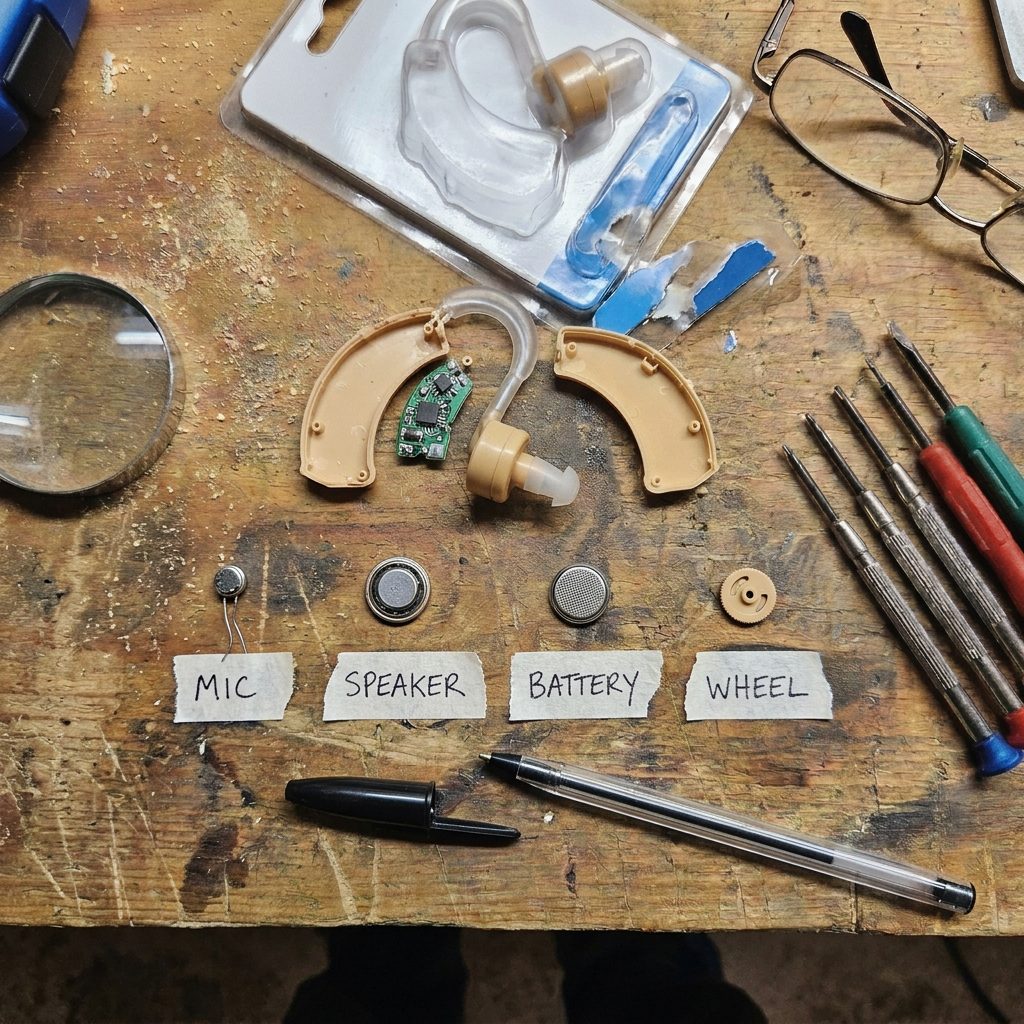
I've built a lot of machines in my life. You learn to look at the parts and know what the thing is built to do. And I could tell you exactly what this one was built to do.
The microphone picks up every sound in the room. The speaker plays it back into your ear, louder. The wheel decides how much louder.
That's all. Nothing in there was built to tell a voice from a dishwasher. Nothing in there could tell Carol from the coffee machine. It takes every sound in and pushes it all back out louder. All of it, the same amount.
I sat back on my stool and said it out loud to nobody:
"That's not a hearing aid. That's an amplifier."
A couple of weeks later I told this story at bowling. My buddy Dennis went quiet. Then he said, "I've got one of those in my drawer too."
The next Saturday he brought his round. He'd paid $60 for his, so I figured maybe it was better. I opened it up on the same bench.
Same story inside. Microphone. Speaker. Battery. Wheel. Twenty dollars more, same nothing.
Why Turning It Up Made the Restaurant Louder and My Wife Quieter
Now I knew what was in the thing. But I still didn't understand why louder made it worse. So I did some reading. Here's the part that finally made sense of it for me.
In age-related hearing loss, the high-pitched sounds usually fade first.
And a lot of the sounds that make words clear live up there in the high pitches. Think of the letters S, F, TH and SH. They're quiet, quick little sounds. They're the difference between "fifty" and "sixty," or "sit" and "fit."

So here's what happens. The deep parts of a voice still come through fine. You can tell somebody's talking. You can tell they're talking loud enough.
But the edges of the words go fuzzy. That's why it seems like everybody mumbles. They're not mumbling. You're just missing the pieces that make the words sharp.
Now put that in a restaurant.
A restaurant is a room full of noise fighting for your ears. Plates. Music. The table next to you. The kitchen. Even before I bought that $40 pair, the noise was winning against Carol's voice.
Then I put in an amplifier. And it turned up the plates. And the music. And the table next to us. And Carol. All by exactly the same amount.
The noise was still winning. It was just winning louder.
That's the whole trick nobody tells you. If the problem is that the words are blurry, turning them up just gives you louder blurry words.
It's like turning up the brightness on a blurry photo. Sure, it's brighter. It's still blurry.
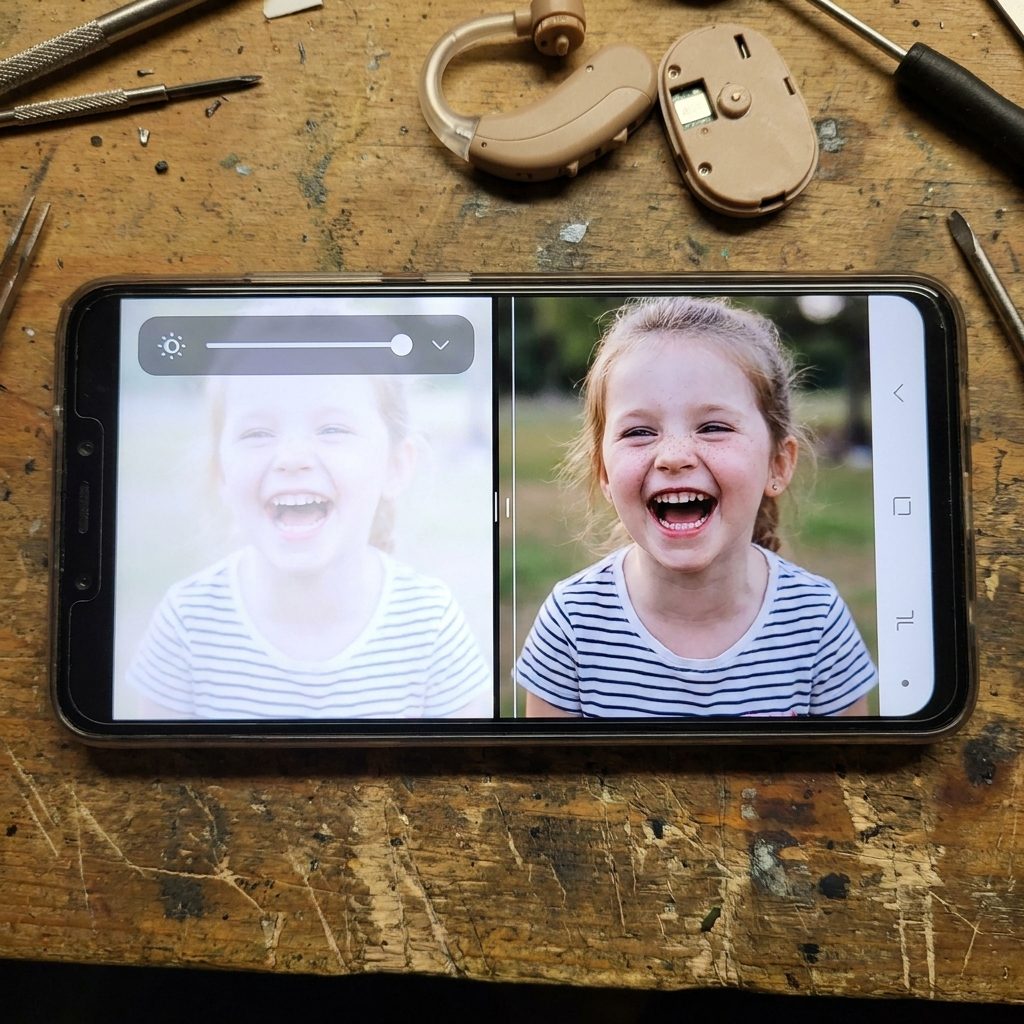
And here's the part that really got me. Kids' voices are higher and softer than grown-ups' voices. So the people we most want to hear, the grandkids, are often the first voices we lose.
Turn everything up, and the whole room gets louder. The little voice stays blurry.
That's why my $40 pair didn't just fail. It made things worse. It made the room louder and left Lily and Carol right where they were, lost in the noise.
My $40 "Hearing Aid" Wasn't a Hearing Aid at All
This is the part I wish somebody had told me three years earlier.
A real hearing aid does a different job from an amplifier. It's built to help you hear speech more clearly, bringing voices forward instead of turning every sound in the room up the same.
When that 2022 law came in, it created its own category: FDA-regulated over-the-counter hearing aids, for adults with perceived mild to moderate hearing loss. They're real hearing aids. You can just buy them without a prescription.
But a lot of what's sold online is something else entirely. It's called a personal sound amplification product. Some of them are even listed as "hearing aids" in the description. They're a different product, built to a different set of rules, and they do a different job.
In a picture on a website, the two look almost the same. Little beige thing. Charging case or a battery door. Lots of stars.
On my workbench, they're about as alike as a pocket knife and a socket set.
So here's what I'd say to anybody with a cheap pair in a drawer. You may never have tried a hearing aid at all. You may have tried an amplifier.
That's why the first thing I do now, before I even look at a price, is check the box.
Before You Spend Another Dollar, Check These 3 Things on the Box
If you take one thing away from my story, take this. Before you spend another dollar on any hearing aid, from anybody, check these three things.
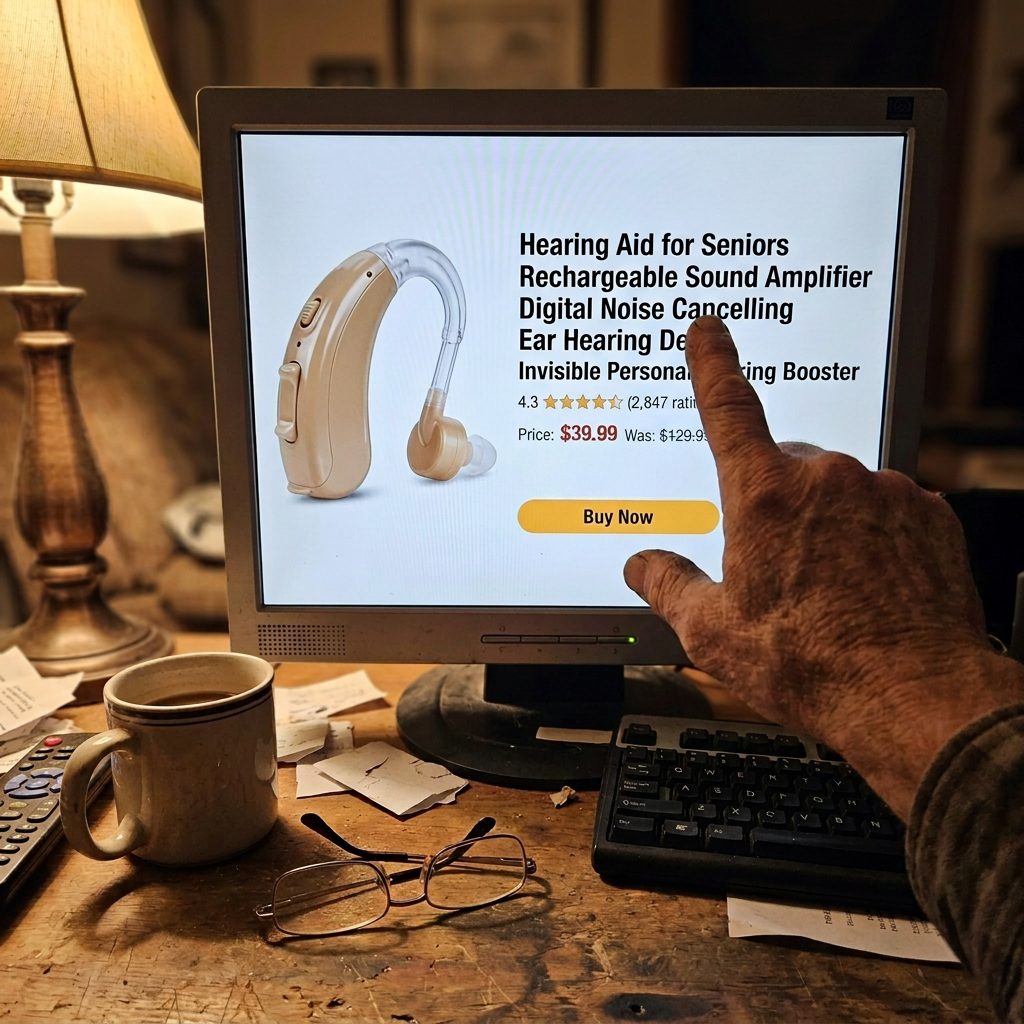
1Does it say "OTC hearing aid"?
Not "sound amplifier." Not "personal sound amplification product." Not just the word "hearing" stuck in the product name. An FDA-regulated over-the-counter hearing aid is its own category, and a company selling one will say so plainly.
If the box or the listing doesn't say it clearly, assume it's an amplifier.
One more thing to watch for: "FDA registered." A lot of companies put that on their page like a badge of approval. It doesn't mean what it sounds like. Ask exactly what the product is.
2Exactly how do I get my money back?
Every company says "risk-free." Every single one. So don't take the words. Ask for the steps.
Is there a phone call where they try to talk you out of it? A video call? A restocking fee? A form? A deadline that starts the day you order instead of the day it arrives?
I've read the horror stories. People waiting months for refunds that never came. Get the steps in writing before you pay a dime.
3Who's behind it, and can I reach a real person?
This one's newer. Several big-name over-the-counter hearing aid brands pulled out of the US this year and left their customers without support.
Where do they ship from? Can you message them and get a real person, not a robot, before you even order?
If a company can't pass those three checks, keep your wallet in your pocket.
The $99.99 Pair That Passed All 3 Checks
My son sent me a link. I knew he had also noticed how bad things had got. And I had to check it out for the sake of little Lily.
I'll be honest with you. My first reaction was, "Here we go again."
I'd been burned once already. I wasn't about to get burned twice. So I ran it through my three checks, the same as I'd do with anything.
Check one: the box. ✓
LISTN Essential is an FDA-regulated over-the-counter hearing aid. They say it right there in plain words. Not an amplifier. Not a "sound enhancer." A hearing aid.
And it's built to do the job my $40 pair couldn't. It uses what they call a vXS MicroChip, with multi-point noise reduction. It's built to separate speech from background noise, so the person across the table comes forward instead of the room around them.
Read that again, because it's the whole story of that night at the diner. The person across the table, not the room around them. That's exactly what I needed.
Check two: the refund. ✓
I'll get to that in a minute. It's the reason I said yes.
Check three: the people. ✓
LISTN is a US company. Orders ship from their warehouse in Texas. And you can reach a real person on WhatsApp, by email, or on the phone. I tested that before I ordered. A person answered. Not a menu. Not a chatbot.
One more thing caught my eye. LISTN isn't sold on Amazon or eBay.
After my $40 pair, that told me something.
How Can a Real Hearing Aid Cost $99.99? They Cut Steps, Not Corners
That was my next question. It's probably yours too.
The clinic wanted $3,190. The pair I'd just thrown in a drawer cost $40 and wasn't even a hearing aid. So how does a real one come in at $99.99?
Here's how they explained it, and it made sense to a guy who spent his life on a shop floor.
They didn't cut corners. They cut steps.
- No clinic rent
- No fitting appointments
- No salesman on commission
- No follow-up visits on the bill
When you buy from a clinic, a big part of that price pays for the building, the staff and the appointments. Some people need all of that, and that's fine.
But with LISTN, you pay for the hearing aids, not the building they're sold in.
Now I want to be straight with you, because I'd want somebody to be straight with me. Is a $99.99 pair the same as a $3,000 custom-programmed clinic aid? I won't tell you that. And you shouldn't believe anyone who does.
What I'll tell you is this. It does the job I needed for my mild to moderate hearing loss. And I got to find that out at my own kitchen table, not in a sales office.
Here's the pair I use →"What If I Hate Them?" Their Answer Is Why I Said Yes
Remember, I'd been burned once. And I'd read the stories online. People sending hearing aids back and waiting months for a refund. People forced onto video calls with salesmen trying to talk them out of it. People charged fees for the return label.
So before I ordered, I sent LISTN a message and asked them straight:
"What if I hate them?"
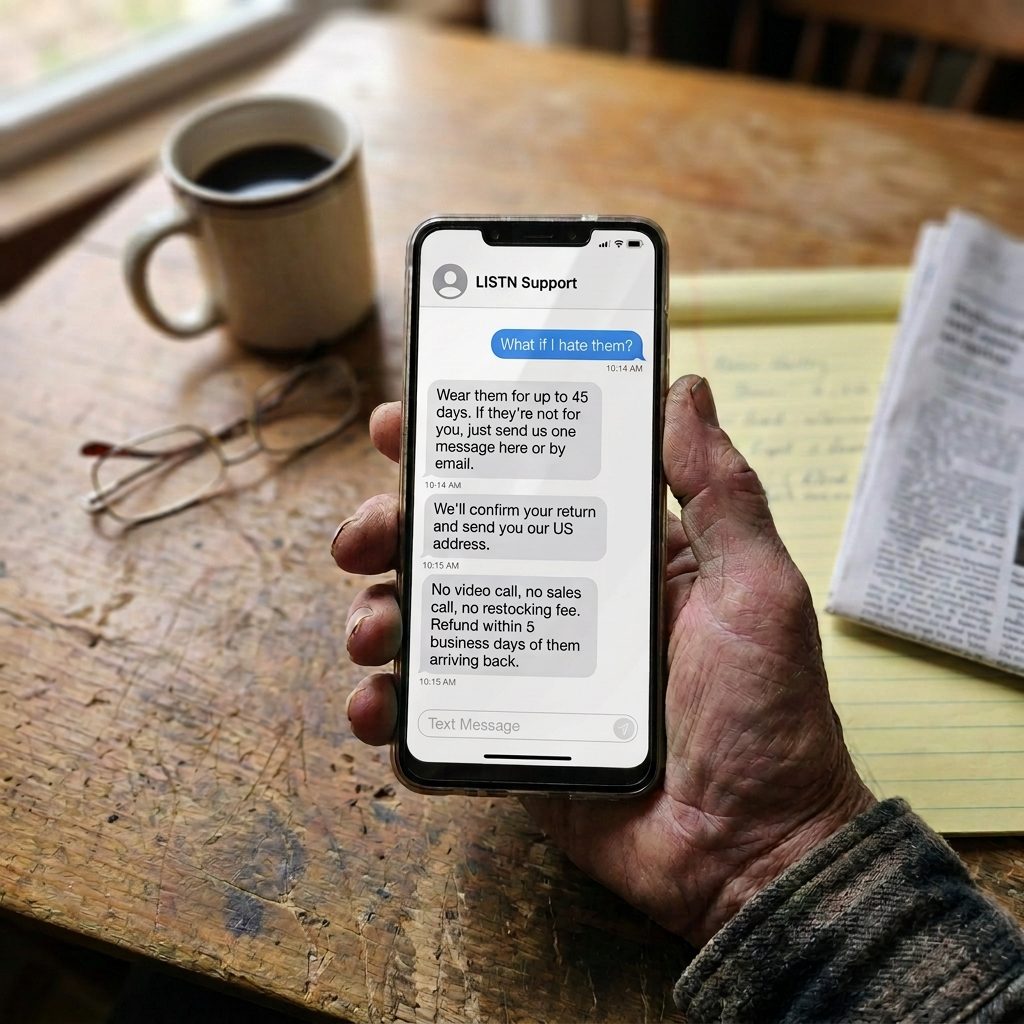
Here's what they told me. I wrote it down word for word, and I'm putting it here so you have it too:
- Wear them for up to 45 days. Real dinners. Real TV nights. Real phone calls with your kids.
- If they're not for you, send one message. On WhatsApp or by email. That's it.
- They confirm your return. And provide a US based address to send to.
- No video call. No sales call. No restocking fee. No form.
- Your refund is processed within 5 business days of the pair arriving back.
They call it a 45-day test drive. And I like that, because it's the right way to think about it.
You'd never buy a car without driving it first. So why would you buy a hearing aid without wearing it through a real dinner? Or a real Sunday at church? Or a real phone call with your grandkid?
That answer is why I said yes. Not the price. Not the reviews. The fact that if I was wrong, it would take one message to fix it.
One Button. No App. No Batteries to Change. Here's What's in the Box
I ordered on a Tuesday. It shipped within a day and was at my door in 4 days.
Here's what was inside:
- Two small rechargeable hearing aids, a left and a right, that sit inside the ear canal
- A charging case that charges both of them overnight
- Four sizes of ear tips, so you can find the one that fits snug in your ear
- A cleaning tool to keep them working right
- A short setup guide that a guy like me could actually follow
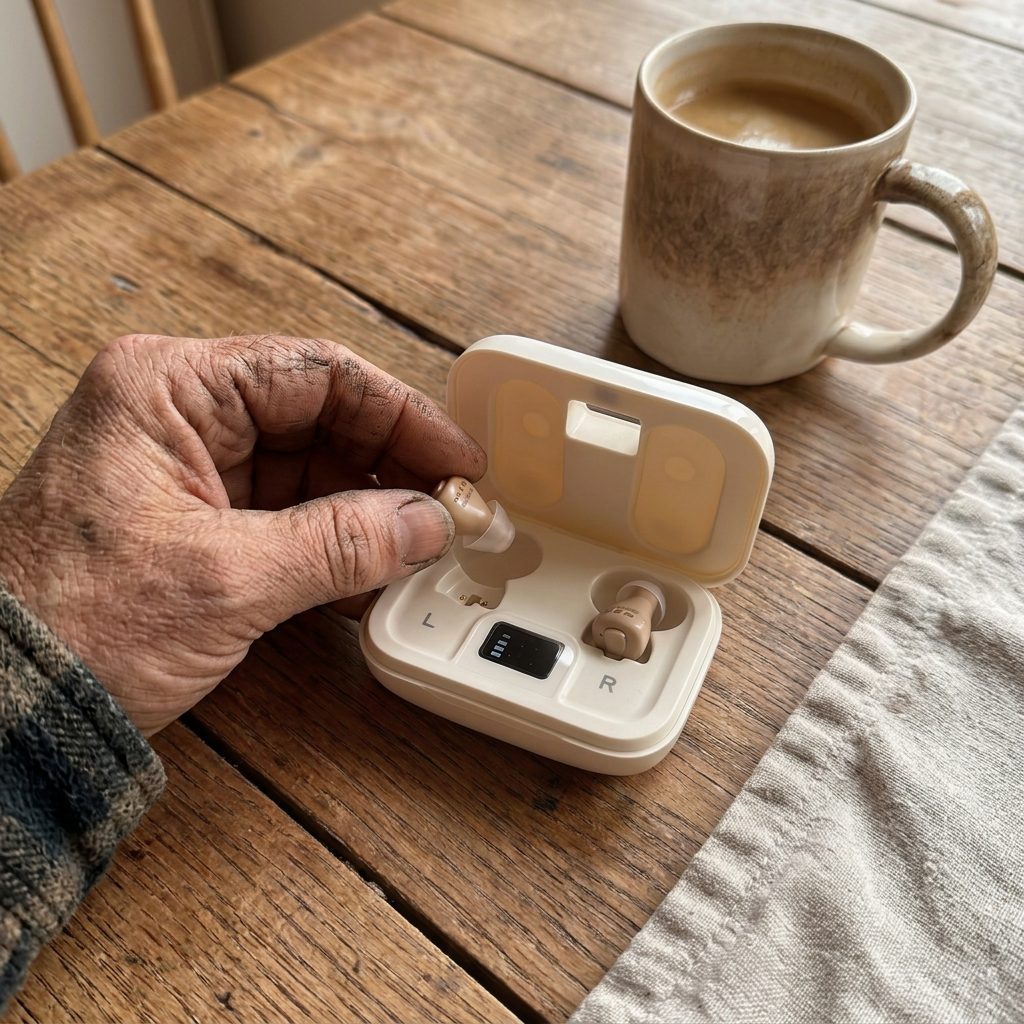
And here's what wasn't in the box. No complicated app to download. No phone to pair. No little batteries to change every few days over the bathroom sink.
Setting them up took me about as long as a cup of coffee:
- Put them in the case and charge them for 3 hours the first time.
- Pick the ear tip that fits.
- Push them gently into your ear until they sit snug.
- Press the button.
One overnight charge lasts all day. I put them in the case when I go to bed, the same way Carol puts her glasses on the nightstand.
My hands aren't what they were after forty-one years in a shop. Little wheels and tiny switches drive me crazy. The one button mattered more than I expected.
A Real Person Checked On Me the First Week. Not a Robot.
This part surprised me.
A few days after they arrived, I got a message from Barry at LISTN. The message asked how they were fitting, and whether I'd found the right tip size.
I hadn't. I'd been using the middle size and they kept feeling loose. Barry told me to try the next size up. That fixed it.
Not a robot. Not a sales pitch. Just a person who wanted to make sure they worked.
I've bought cars from people who cared less.

Will They Whistle? Will People See Them? My Honest Answers
These are the questions I had before I ordered. Here's what I found.
Will they whistle?
If a hearing aid whistles, it's usually the fit. That's why there are four tip sizes in the box. If you get any whistling, try a different tip, or message the team and they'll help you sort it out.
Will people see them?
They sit inside the ear canal. Carol had to look twice the first time, and she knew they were there.
Do I need a hearing test first?
Not for adults with perceived mild to moderate hearing loss. That's what the 2022 rule changed. But there are a few times you should see a doctor first, and I'll list them below. Please read them.
Can I set them up myself?
If I can, you can. Charge, pick a tip, push them in, press the button. And if you get stuck, a real person will walk you through it.
How long does the battery last?
All day on one overnight charge. I haven't run out yet.
What if they don't work for me?
One message, within 45 days. See above.
Back at the Same Diner. Same Noise. This Time I Heard Every Word.
A couple of weeks after they arrived, Carol and I went back to the diner. Same booth. Friday night.
I'll be honest with you, because I promised I would be. The place didn't go quiet. Somebody still dropped something in the kitchen. The coffee machine still hissed. There was a birthday party two tables over, and they sang. Badly.
Nothing makes a diner quiet. Anybody who tells you different is selling something.
But then Carol leaned across the table to tell me about her sister.
And I heard her.
Not "your sister" and maybe "Sunday." The whole thing. Her sister was coming for Sunday dinner, she was bringing the new boyfriend, and Carol wanted to know if I'd behave myself.
I said, "No promises."
She laughed. And then she sat back and looked at me for a second, the way she used to look at me when we were first married. Because she knew. I hadn't said "what?" once all night.
The plates were still loud. The birthday party was still loud. But Carol's voice wasn't lost in it anymore.
For the first time in three years, I wasn't just sitting at the table. I was at it.
Later that week I noticed the TV volume was on 14. It used to live at volume 30. Carol didn't say a word. She didn't have to.

My Granddaughter Read Me Her Whole Book. I Never Turned Around.
A few weeks after that, I picked Lily up from school.
She climbed in the back seat with a library book and asked if she could read it to me on the drive home.
Now, a few months earlier, that would've been impossible. Road noise. The engine. A little voice behind me, facing the other way. I'd have caught one word in five and said "That's great, sweetheart" at the end.
This time I heard every page.
The dragon. The princess who didn't want to be rescued. The part where the dragon turns out to be scared of the dark. All of it. All the way home.
I didn't turn around once. I didn't need to.
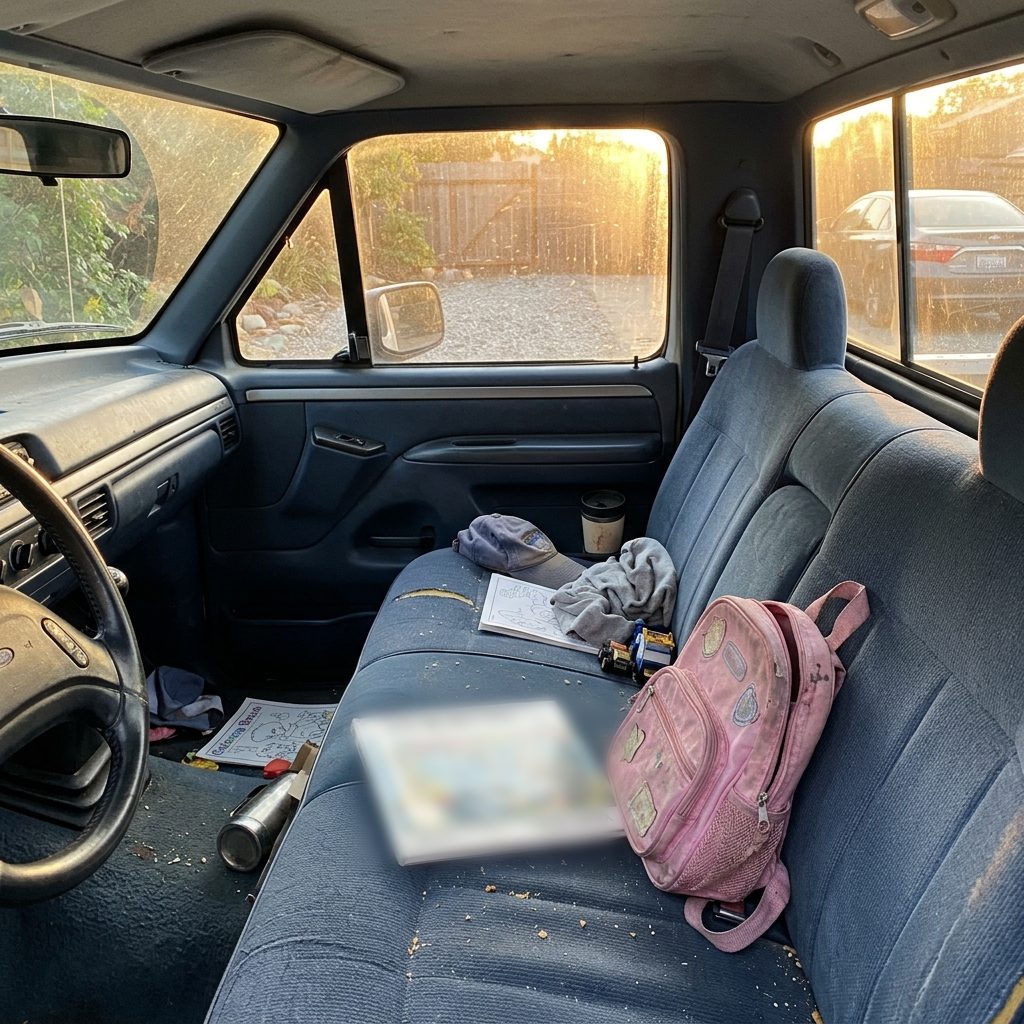
When we got in, Lily ran straight to Carol to tell her she'd read Grandpa her whole book and he didn't say "what?" even one time.
Carol looked at me over Lily's head and started crying.
I had to go look out the kitchen window for a minute.
Who Shouldn't Buy These (Yes, I'm Telling You)
I'm going to tell you something most companies won't. These aren't for everybody.
LISTN Essential is for adults 18 and over with perceived mild to moderate hearing loss. That's people like me. The TV creeping up. Restaurants getting hard. Everybody mumbling.
If any of these are true for you, please see a doctor first:
- Your hearing changed suddenly
- It's much worse in one ear than the other
- You have ear pain, drainage or dizziness
- You have trouble hearing even loud sounds
- You've had a recent ear infection or injury
And I'll say it again. They won't make a crowded restaurant silent. Nothing will. What they did for me is let me follow the person across the table again.
If that's what you're after, keep reading.
Two Guys From My Bowling League Got Their Own. Neither Sent Them Back.
Remember Dennis, with the $60 pair? He ordered a LISTN pair the same night I opened his amplifier on my bench. He says he can hear the scores called out at the lanes again. He hasn't stopped bragging about it, which is a whole new problem.
Then there's Gary. Gary ordered after watching me at his grandson's birthday party. He told me later he'd been doing the exact same thing I was. Nodding along to a five-year-old. Now he says he actually knows what happened at recess. His wife says the TV is finally down to a number she can live with.

Neither of them has sent theirs back.
And it's not just the bowling league. Here's what a few other LISTN customers have said:
"My grandson thought I was ignoring him. I wasn't. I just couldn't hear him. I missed a year of family dinners because of it. One month with LISTN and I caught every word at Thanksgiving. My daughter cried. So did I."
"I used to just nod along at dinner and hope nobody asked me a question. My granddaughter noticed before I did. These fit right in, barely anyone notices them, and now I actually hear her instead of guessing."
"Was quoted over one thousand dollars at a clinic and just never went back. Saw these for ninety nine and figured I'd try it before spending that kind of money. No whistling, no appointment, works fine for what I need."
"Skeptical because of the price honestly, my family warned me about buying medical stuff online. Forty five days in and I haven't sent them back. Real person answered my questions on WhatsApp before I even ordered."
Try Them at Your Own Table for 45 Days
If you want to try what I use, here's everything in one place.
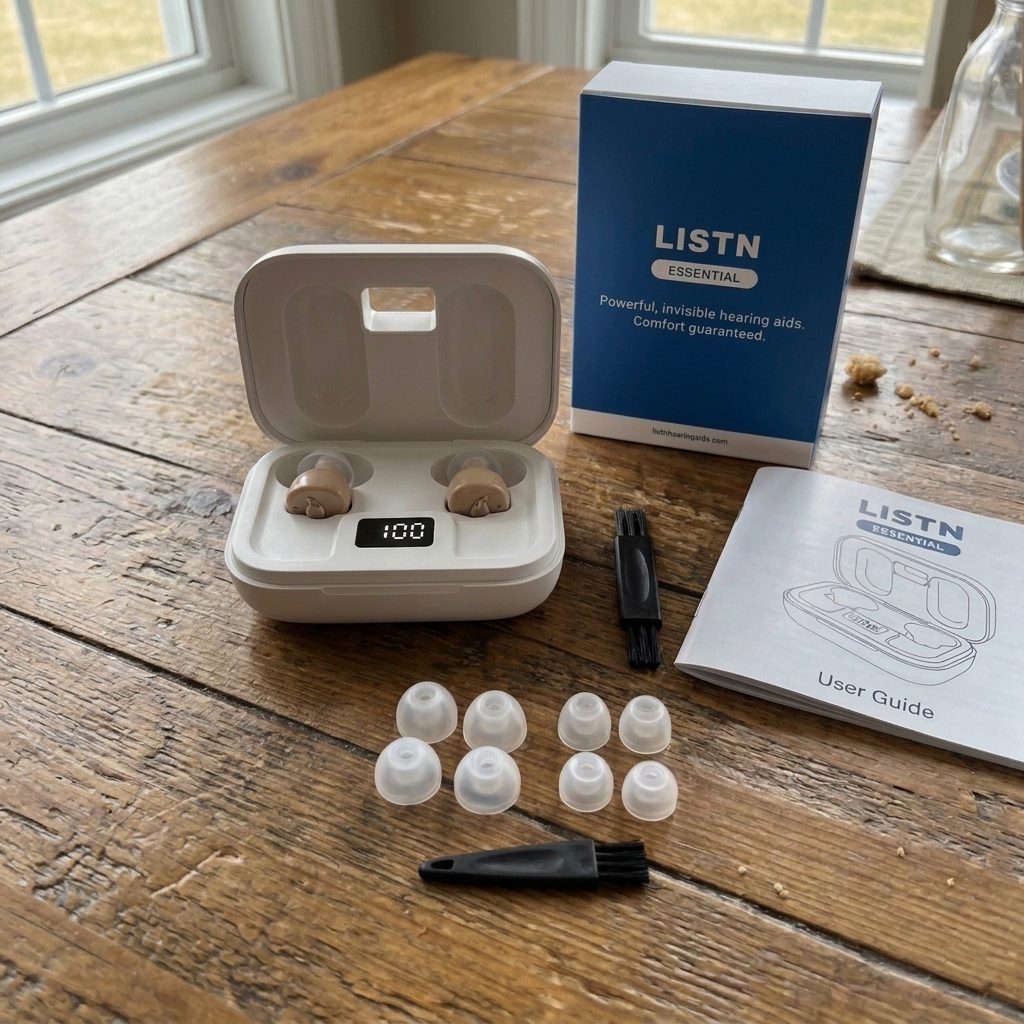
LISTN Essential: $99.99 for the pair
- FDA-regulated over-the-counter hearing aid for adults with perceived mild to moderate hearing loss
- vXS MicroChip built to bring speech forward from background noise
- Two rechargeable aids that sit inside the ear canal, a charging case, four ear tip sizes and a cleaning tool
- One button. No app. One overnight charge lasts all day.
- Ships within 24 hours from our Texas warehouse
- Try them for 45 days: one message to return, refund within 5 business days
- Real people on WhatsApp, email and phone
If There's a Cheap Pair in Your Drawer, Don't Give Up Yet
I wrote all this down for one reason.
Somewhere out there is a guy like me, sitting in a noisy restaurant, nodding at his wife. He's got a $40 pair in his kitchen drawer, and he's decided hearing aids don't work.
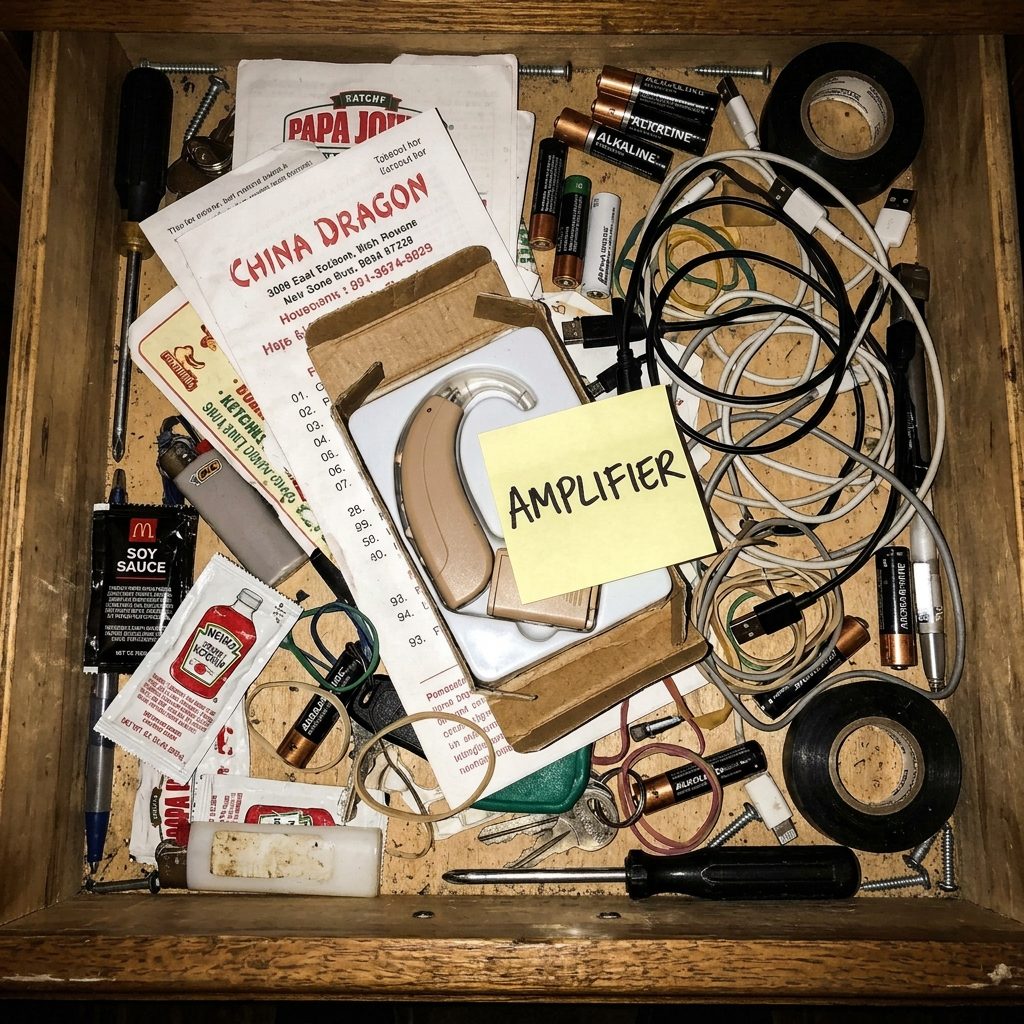
If that's you, don't give up yet. You may never have tried a hearing aid at all. You may have tried an amplifier.
And please don't wait three years like I did. That's three years of jokes you don't get back. Three years of dinners you sit through instead of being part of. Three years of a little voice going to someone else with their news.
You don't have to decide anything today except whether to find out.
Read my three checks again. Hold any hearing aid you're thinking about up against them. Then, if you want, try mine at your own table for 45 days.
If it's not for you, it's one message.
If it is, you might just hear the whole book.
— Ray
Check Availability →Not for you? One message, refund in 5 business days.P.S. If someone you love has started nodding along at dinner, this might be the Christmas gift. Give it as a 45-day test drive. It's their call, not yours, and if it isn't for them, it's one message to send back. No lecture required. Order by Monday, December 14 to have it there for Christmas.
Comments
6 commentsShared by verified LISTN customers.
My wife had to repeat everything twice. Now she doesn't. Took mine out of the box, charged them overnight, been wearing them every day since. Best ninety nine dollars I've spent in years.
Had a cheap pair years ago that died in a few weeks. These have held up so far, still on the original charge cycle after a month. Not invisible like clinic ones but close enough that nobody's mentioned it.
Bought these for my dad after years of him refusing to even discuss hearing aids. He wore them within a week. Low cost meant he didn't feel like it was a big commitment, which was the whole problem before.
I'd stopped answering the phone. Even calls from my kids. Just let everything go to voicemail and hoped they'd text. My daughter thought I was depressed. I wasn't — I just couldn't hear. Put these in on a Monday. Called my son that same evening. Talked for an hour. First proper phone call in over a year.
I kept turning the TV up until my wife left the room. Didn't think much of it until she said something. These took the guesswork out, I don't have to ask her what I missed anymore.
I was nodding along in meetings pretending I'd heard. Missed deadlines because I misheard instructions. Too embarrassed to say anything. These changed that. First meeting I wore them I caught every word across a conference table. Nobody knew I had them in. Nobody.